
Decoding the Digital Divide: Women, Tech, and the Internet
An analysis of the challenges and triumphs of women in technology, examining gender bias in design, the fight for representation, and the impact of the digital world.
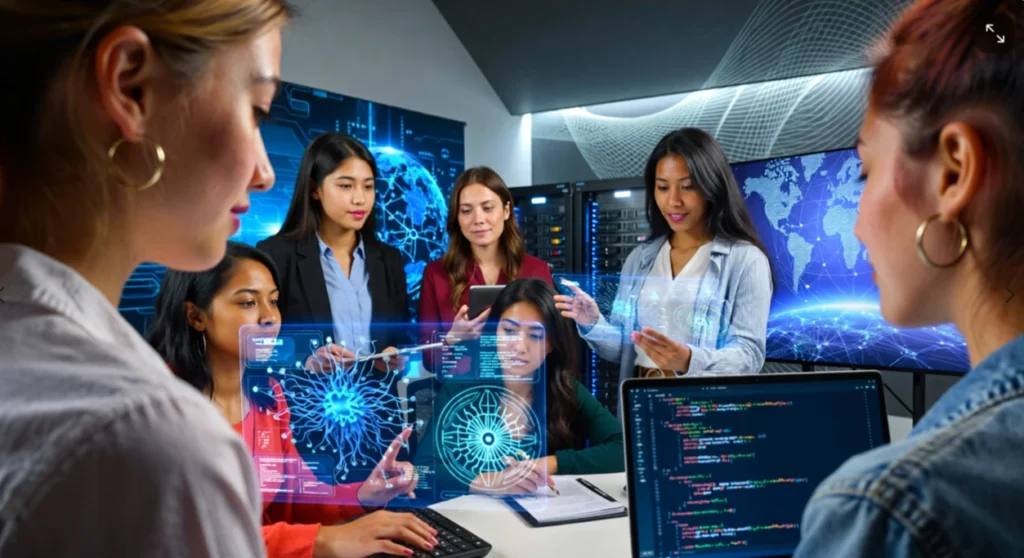
The internet, once heralded as the great equalizer, is, in many ways, a reflection of the society that built it—complete with its ingrained biases and systemic inequalities. While technology has offered unprecedented connectivity and opportunity, the experience of “internet chicks” (women and girls engaging with, or working within, the technology sector) remains distinctly complex. They navigate environments—from corporate boardrooms and open-source communities to gaming platforms and AI development labs—that were largely designed by and for men. This article explores the multifaceted relationship between women and technology, examining the hurdles of gender bias, the imperative for representation, and the unique ways women are shaping the digital future.
The Problem of the Pink and Blue Code

The first major challenge women face is the foundational issue of gender bias in design and data. Technology is rarely neutral; it is embedded with the assumptions of its creators. When the vast majority of engineers, designers, and programmers are male, the resulting products often fail to account for female experiences, needs, or even basic physiology.
1. Biased Algorithms and Data Sets
Artificial Intelligence (AI) and machine learning are built upon historical data. If that data reflects a history of male dominance in certain fields, the AI will learn to perpetuate that bias.
- Hiring Tools: Early AI-powered hiring tools, trained on historical data from male-dominated companies, routinely penalized resumes that included the word “women’s” (e.g., “women’s chess club”) because they associated the data with less successful candidates.
- Health Technology: The historical exclusion of women from clinical trials has led to devices like wearables and health monitoring apps being less accurate for female bodies, from tracking fitness metrics to recognizing symptoms of heart attacks, which often manifest differently in women than in men.
- Facial Recognition: Studies have shown that facial recognition software is less accurate at identifying female faces and faces with darker skin tones, a result of training data sets that disproportionately feature white male faces.
This phenomenon, often termed the “gender data gap,” means that technology designed to optimize efficiency and fairness often ends up being inefficient and unfair for half the population.
2. The Design Default: A Male Perspective
Even in product design, the male experience is often the default. Safety features, accessibility, and basic usability are compromised when women are not part of the design process. For instance, the standard smartphone size is often too large for the average woman’s hand, a minor inconvenience that underscores a major exclusion in user experience design. Furthermore, digital services and tools targeting women often fall into the trap of “pinkwashing”—simply rebranding a product with stereotypical colors and fonts rather than addressing substantial, practical needs.
Fighting for a Seat at the Console: Representation in STEM

The lack of diversity in the tech workforce is both a cause and a consequence of the issues mentioned above. Despite making up nearly half of the global workforce, women hold only a small fraction of technical roles, particularly in leadership and core engineering positions. The journey of the “internet chick” into STEM fields is fraught with challenges.
1. The Leaky Pipeline
The problem begins early. While girls often show strong interest and ability in science and math in early schooling, a “leaky pipeline” sees them drop off significantly around high school and university. Factors include:
- Hostile Cultures: University computer science departments and early-career tech companies can possess hyper-competitive, isolating, and often overtly sexist cultures that drive women out.
- Stereotype Threat: The psychological burden of knowing that one’s performance might confirm a negative stereotype about one’s group (e.g., “girls aren’t good at coding”).
- Lack of Role Models: A scarcity of visible female leaders and engineers makes it harder for young women to envision themselves in those careers.
2. The Tech Bro Culture
For women who make it into the industry, the environment is often unwelcoming. The prevailing “tech bro” culture—marked by long, intense hours, a lack of work-life balance, aggressive meritocracy arguments, and sometimes harassment—contributes significantly to the high attrition rate of women in tech. Women leave the industry at twice the rate of men, often citing workplace environments and a lack of clear career progression. The systemic failure to address issues like pay disparity, sexual harassment, and the “motherhood penalty” (where mothers are implicitly penalized or passed over for promotions) costs the industry untold talent and innovation.
The Digital Playground: Online Toxicity

Beyond the professional sphere, women’s daily experiences online are often marred by widespread harassment and toxicity. The digital realm, particularly in arenas like gaming, forums, and social media, frequently fails to be a safe or empowering space for women.
1. Gaming and Gatekeeping
Online gaming, a massive sector of technology, is notorious for its toxic environment toward women. Female gamers, when their gender is revealed, frequently face targeted harassment, sexual threats, and deliberate attempts to sabotage their gameplay. This gatekeeping behavior asserts male dominance over a cultural space, punishing women for daring to enter and succeed. The culture of anonymity and the failure of platforms to enforce strong moderation policies allow this harassment to flourish unchecked.
2. The Public Shaming Machine
On social media, women in tech—or women who simply express technical opinions—often face a unique form of critique known as “mansplaining” and “sealioning” (aggressively demanding proof or detailed explanations from the woman while ignoring her expertise). Female executives, entrepreneurs, and content creators are subject to intense, gendered scrutiny of their appearance, credentials, and tone in ways their male peers are not, ultimately serving to silence or marginalize their contributions.
The Triumph of the Internet Chicks: Agents of Change
Despite these substantial barriers, women are not merely victims of the system; they are powerful agents of change, using technology to build new tools, create inclusive cultures, and advocate for a more equitable future.
1. Building and Redefining Tech
A growing movement of female founders and engineers is building technology specifically designed to address the gender data gap:
- Femtech: A rapidly expanding sector focused on women’s health technology, from fertility tracking to menopause management, demonstrating the market power of products created with and for women.
- Inclusive Design: Advocacy for “privacy-by-design” and “ethics-by-design” principles are being driven by women who understand that social consequences must be integrated into the development process, not bolted on as an afterthought.
2. Community and Empowerment
The internet itself is being leveraged to create the support systems that traditional tech institutions lack. Online communities, mentorship programs, and coding bootcamps specifically for women and marginalized groups are providing safe spaces for learning, networking, and mutual support. These networks combat the isolation of working in male-dominated fields and provide a critical pipeline for future talent.
The story of “internet chicks” and technology is a story of resistance, innovation, and essential cultural transformation. It is a demand that the tools that shape our future—from the algorithms that decide who gets a job to the medical devices that save lives—be built with the full human experience in mind, not just half of it. The fight to close the digital divide is not merely about achieving parity in the workforce; it is about fundamentally redefining what technology is, who it serves, and what a truly inclusive digital world can look like.